// PROJECT SUMMARY
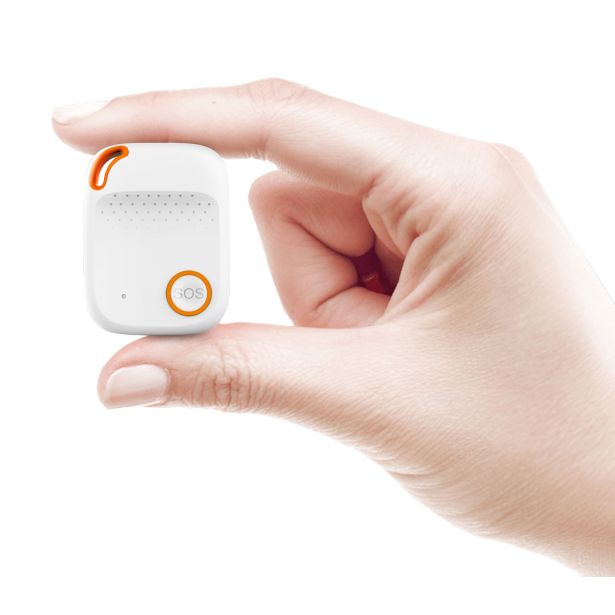
The SOS Panic Button started as an extension of the ElderON elderly-care platform and eventually became a standalone B2C service for people who want a simple way to call for help for themselves or their relatives.
Technically, however, this project represents something more important for us.
We deliberately decided not to develop the hardware.
Instead, we sourced an existing panic-button device and focused our development effort on the software, mobile application, service infrastructure and customer experience around it.
It marked an important transition in our thinking from being primarily engineers to becoming product developers who use engineering only where it creates value.
// THE PROBLEM
After developing ElderON for elderly-care facilities, we saw an opportunity to address a similar need directly in the consumer market.
People living alone — particularly elderly users — may need a simple way to notify relatives or caregivers when they need assistance.
The obvious engineering approach would have been to design our own panic button. Custom electronics. A new PCB. An enclosure. Firmware. Certification. Manufacturing.
We knew how to do all of those things.
But none of them were the actual customer problem.
The customer simply needed a reliable and easy way to call for help.
// THE SOLUTION
Instead of starting another hardware-development project, we searched the market for existing devices that could provide the functionality we needed.
We identified a suitable panic-button supplier and used the existing hardware as the foundation of our service.
Our development effort could then focus on the parts that differentiated the product: the software platform, application, notifications, user management and complete service experience around the device.
This allowed us to move much faster from concept to a product that customers could actually buy and use.
// OUR WORK
JPM Systems was responsible for:
- – Product concept development
- – Business-model development
- – Hardware evaluation and supplier selection
- – Third-party device integration
- – Custom software development
- – Backend development
- – Mobile application development
- – User and device management
- – Alert and notification logic
- – Device-to-cloud integration
- – Customer onboarding
- – Service infrastructure
- – Testing and validation
- – B2C product development
- – Go-to-market
- – Ongoing product operation
// KEY CHALLENGES
Resisting the Engineer's Instinct to Build Everything
As engineers, our natural reaction to a hardware problem is often: let's build it.
For this project, we deliberately challenged that instinct.
A suitable physical device already existed. Developing our own version would have required significant engineering effort, tooling, certification, manufacturing setup and capital without initially creating enough additional value for the customer.
So we didn't build it. We bought it.
Business First, Engineering Second
The SOS Panic Button marked an important change in how we thought about product development.
Engineering is a tool for creating a successful product — it isn't the objective itself.
If an existing component, device or platform solves the requirement, using it can be significantly better than spending months developing a custom alternative.
Custom development should be used where it creates competitive advantage, improves the customer experience, enables functionality that doesn't otherwise exist or becomes economically justified at scale.
Moving from B2B to B2C
ElderON was primarily developed for elderly-care facilities.
The panic-button service required us to think differently.
The customer was now an individual purchasing the service for themselves, a parent or another relative.
This changed the product experience, onboarding, communication, support and purchasing process and gave us direct experience with developing and operating a B2C technology service.
Integrating Instead of Reinventing
Using existing hardware didn't eliminate engineering work — it changed where that work happened.
The challenge became integrating the device into our own software ecosystem and building the surrounding infrastructure required to turn a generic piece of hardware into a complete customer solution.
The value of the product came from the whole system, not from who designed the PCB inside the button.
// THE RESULT
The SOS Panic Button became a standalone B2C product that we continue to offer to customers looking for a simple way to provide additional safety for themselves or their relatives.
More importantly, it fundamentally changed our philosophy of product development.
ElderON taught us to start with the problem rather than the technology.
The SOS Panic Button took that lesson one step further: don't develop something just because you can.
Use existing technology when it solves the problem. Integrate where possible. Develop custom technology where it creates real value. Validate the business first, and optimize or replace components later when there is a clear reason to do so.
As engineers, we can always engineer for fun. When developing a business, the product and the customer come first.