// PROJECT SUMMARY
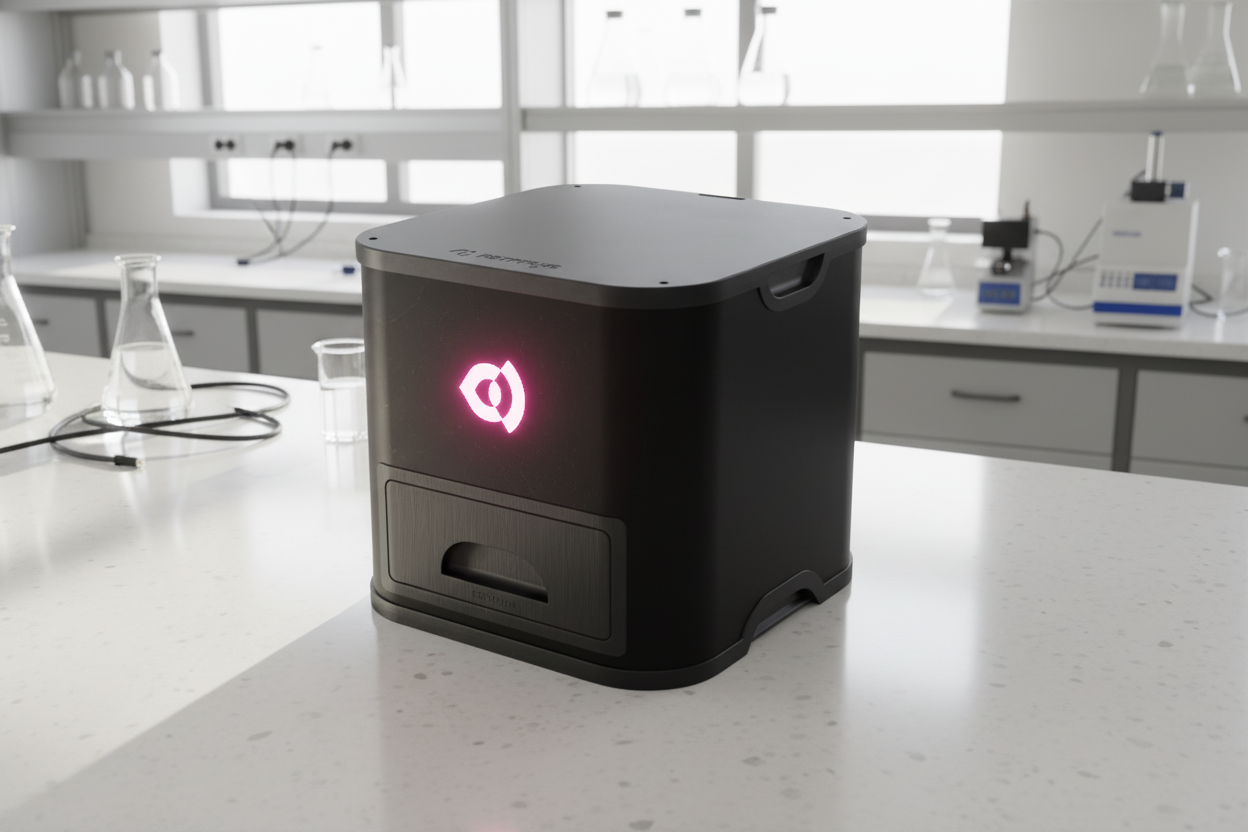
Petrieye is developing a modular laboratory device for automated bacteria incubation and imaging of bacterial samples used in veterinary diagnostics for bacteria categorization. The end goal is to limit the use of wide spectrum antibiotics in veterinary use. JPM Systems supported the transition from an early functional prototype toward a production-ready product, with a focus on custom electronics, mechanical design, thermal control, modularity and manufacturing.
// THE PROBLEM
Petrieye had already developed the core software and demonstrated the basic functionality of the system using a Raspberry Pi, cameras, heaters, temperature sensors and LED illumination.
The next challenge was turning this prototype into a reliable product that could be manufactured, cleaned, serviced and expanded from one to four incubation chambers.
The system also required stable temperature control around 37 °C, repeatable imaging conditions for image analysis, simple insertion and removal of Petri dishes, and an architecture that could support multiple chambers from a single control unit.
// THE SOLUTION
We developed a new system architecture for a modular incubation and imaging platform, designed to support between one and four identical chambers connected to a single Raspberry Pi-based control interface.
Our work focused on converting the existing prototype into a robust and manufacturable system. This included custom hardware development, electronics and PCB design, temperature sensing and heater control, camera and lighting integration, power architecture, modular connectivity and mechanical redesign.
Each chamber provides a controlled environment for bacterial growth while the integrated camera periodically captures images of the sample. The existing software can then analyze bacterial growth and notify the user when sufficient growth has been detected for further diagnostic evaluation.
The complete system was designed with future industrialization in mind, including serviceability, standardized components, cleanability and low-volume serial production. One of the requests was also to omit any firmware from the chamber so that there is only Raspberry Pi software to maintain. Having 4 chambers connected to one Pi with no protocol or microcontroller on the other end was a bit of an extra challenge.
// OUR WORK
JPM Systems was responsible for:
- – System architecture and product development
- – Custom electronics development
- – PCB design and two hardware development cycles
- – Heater control and temperature measurement
- – Power-system architecture
- – Raspberry Pi hardware integration
- – Multi-camera architecture and camera multiplexing
- – LED illumination and lighting control
- – Sensor integration
- – Modular electrical connectivity for 1–4 chambers
- – Mechanical redesign and enclosure development
- – Material selection for cleaning and disinfection
- – Prototype development and testing
- – Design for manufacturing (DFM)
- – Preparation for product industrialization
- – Technical documentation and manufacturing preparation
- – Manufacturing of first series of products
// KEY CHALLENGES
Precise Temperature Control
Reliable bacterial incubation requires a stable temperature around 37 °C. The system therefore needed accurate temperature sensing, controlled heating and sufficient thermal insulation while maintaining consistent conditions close to the sample.
The target was to achieve temperature stability of approximately ±0.5 °C, with development work investigating whether performance could be improved toward ±0.2 °C.
Modular Architecture
One of the main product requirements was the ability to operate one, two, three or four incubation chambers from the same Raspberry Pi controller.
This required careful design of power distribution, GPIO usage, sensors, camera interfaces and connectors so that additional chambers could be added without duplicating the complete control electronics.
Repeatable Imaging Conditions
Because captured images are used for automated analysis, image quality must remain consistent over time and between devices.
We therefore worked on standardized LED illumination, controlled brightness, stable camera positioning and a system architecture that supports repeatable camera and lighting calibration.
Camera Connectivity
Supporting several cameras from one Raspberry Pi introduced limitations around CSI interfaces, GPIO usage, cable length and modular assembly.
A dedicated camera architecture was developed around multiplexing and CSI extension, allowing cameras to remain part of removable incubation modules while still being controlled from a central Raspberry Pi.
Cleaning and Serviceability
The device is intended for laboratory use and must tolerate regular cleaning and disinfection. Mechanical components and material selection were chosen accordingly.
// THE RESULT
The project moved Petrieye from an early functional prototype toward a production-ready, modular incubation and imaging platform — combining custom electronics, thermal control, a multi-camera architecture and a design prepared for serviceable, low-volume serial production.